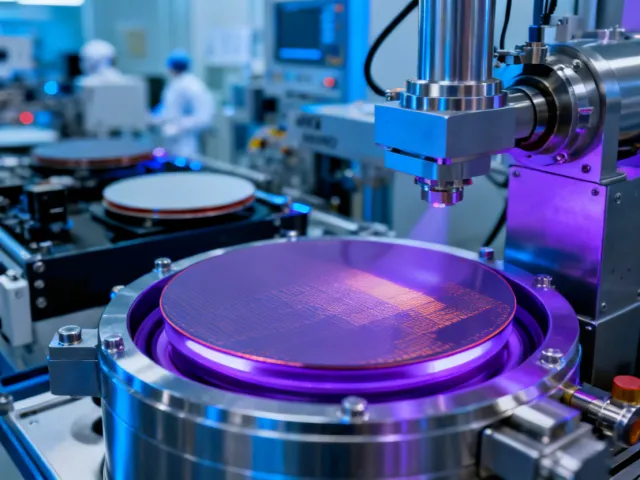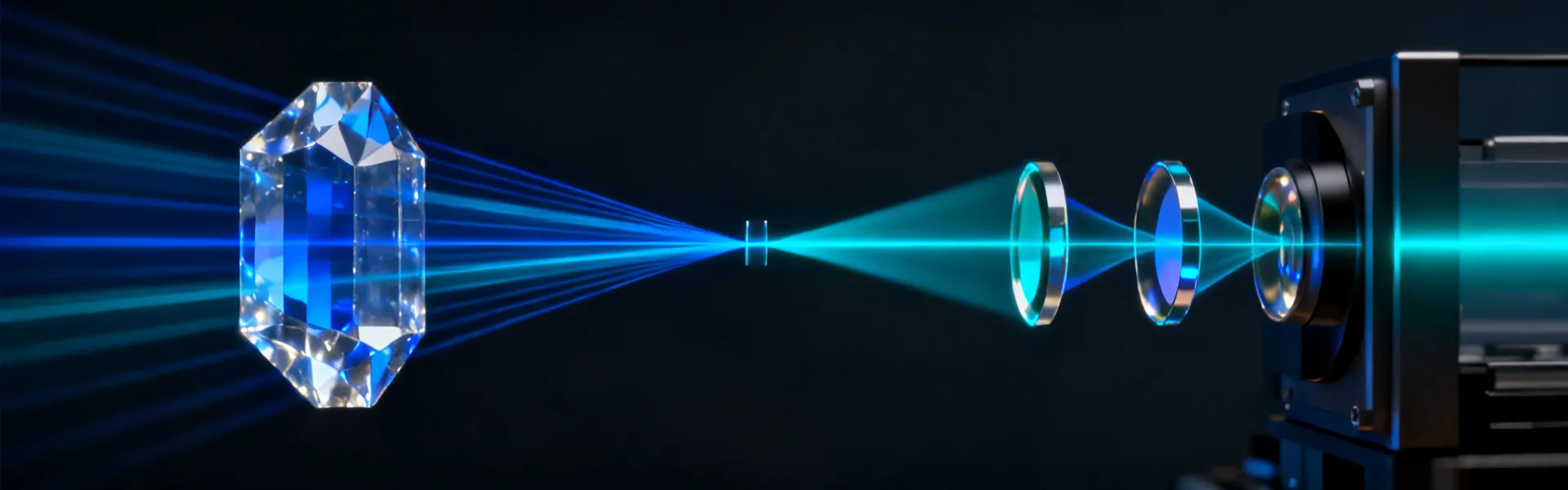
From III-V semiconductor epitaxy to free-space beam delivery optics, every Coherent system is built on core technologies we develop and manufacture in-house. This page explains what those technologies are, how they work, and where they matter.
Each laser type occupies a specific region of the wavelength-power-pulse duration parameter space. Selecting the wrong architecture for your application wastes energy, reduces quality, and increases cost-per-part. Here is how each technology works and where it excels.
Coherent HighLight FL-series fiber lasers use ytterbium-doped double-clad fibers pumped by our proprietary high-brightness diode stacks. The fully fiber-guided architecture eliminates free-space alignment drift, providing beam quality (M-squared) below 1.1 at output powers from 1kW to 30kW.
Wall-plug efficiency exceeds 40%, measured from AC input to workpiece, not just diode-to-diode. This is a meaningful distinction because thermal management losses in the power supply and fiber coupler are often excluded from competitor specifications.
Excimer lasers produce deep ultraviolet light through stimulated emission in rare-gas halide molecular complexes (ArF at 193nm, KrF at 248nm, XeCl at 308nm). Unlike solid-state frequency conversion, excimer sources generate UV photons directly, avoiding the beam quality degradation inherent in multi-stage harmonic generation.
Coherent excimer lasers achieve pulse energy stability below 0.5% (1-sigma) at repetition rates up to 6kHz. This stability is critical for semiconductor lithography where dose uniformity across the scan slit directly impacts line-edge roughness at advanced nodes.
The Coherent Chameleon and Astrella platforms use titanium-doped sapphire gain media to produce broadly tunable ultrashort pulses. Mode-locked oscillators deliver sub-10 femtosecond pulses with transform-limited bandwidth, while regenerative amplifiers reach millijoule-level pulse energies at kilohertz repetition rates.
A practical note: Ti:Sapphire systems require green pump lasers (typically 532nm), adding complexity and cost compared to direct-diode-pumped fiber systems. For applications requiring only a single wavelength above 1 MHz, Yb-fiber ultrafast sources may be more cost-effective. We offer both architectures and recommend based on your specific application parameters.
Coherent designs and fabricates high-power semiconductor laser diodes on III-V compound substrates (GaAs, InP) using metalorganic chemical vapor deposition (MOCVD). Our vertical integration begins at the epitaxial wafer level, giving us direct control over active region composition, doping profiles, and facet passivation chemistry.
Single emitter output exceeds 25W at 976nm with greater than 65% electrical-to-optical conversion efficiency. Hard-soldered diode bars deliver 200W per bar with qualified lifetimes exceeding 30,000 hours at rated current. These diodes serve as pump sources for our own fiber and solid-state laser platforms, creating a closed reliability feedback loop that component purchasers from third-party diode vendors cannot replicate.
While fiber lasers dominate metal cutting, CO2 lasers remain the technically superior choice for processing non-metals including wood, acrylic, textiles, paper, and thin-film organics. The 10.6 micrometer wavelength is strongly absorbed by these materials, enabling clean cuts with minimal charring at high feed rates.
Coherent Diamond series sealed CO2 lasers deliver 50W to 1kW in a maintenance-free package with gas lifetimes exceeding 20,000 hours. We are transparent about the fact that CO2 laser market share has declined significantly in metals processing since 2015. For metals, we recommend our fiber laser platforms. For non-metals, CO2 remains the right tool.
Coherent designs transmitter and receiver PICs on indium phosphide (InP) substrates for coherent optical communication. Each PIC monolithically integrates tunable lasers, modulators, and photodetectors on a single chip, reducing component count, insertion loss, and assembly cost compared to discrete hybrid architectures.
Our PICs are co-packaged with proprietary digital signal processing (DSP) ASICs in QSFP-DD and OSFP form factors. The 400ZR modules achieve 120km reach at less than 15W total module power. The 800G generation, currently in qualification, targets sub-20W power for 800 Gbit/s per wavelength using 140 GBaud 16QAM modulation.
Conventional single-mode fiber lasers deliver a Gaussian intensity profile: high peak intensity at center, falling off toward the edges. This profile works well for cutting, where you want maximum power density at the kerf, but creates problems in welding where excessive center intensity causes spatter, porosity, and irregular bead geometry.
ARM technology addresses this by splitting the laser output into two independently controllable beams: a central core beam for keyhole initiation and an annular ring beam for melt pool stabilization. The operator adjusts the power ratio between core and ring in real time during the weld cycle, without changing total output power.
The practical impact is measurable. In aluminum battery tray welding for EV applications, ARM-equipped systems reduce spatter by up to 70% compared to single-mode welding at equivalent power and speed. In copper hairpin welding for electric motor stators, ARM enables consistent penetration depths across a 15% wider process window.
It is worth noting that several competitors offer similar dual-beam concepts. What differentiates our implementation is that both core and ring beams originate from the same fiber laser cavity with a single delivery fiber, avoiding the alignment complexity and reliability concerns of external beam-combining optics.
The performance ceiling of any photonic device is ultimately set by the quality of its semiconductor materials. Coherent operates epitaxial growth facilities producing III-V compounds (GaAs, InP, GaSb) and II-VI compounds (ZnSe, CdZnTe) for applications ranging from pump laser diodes to infrared detector arrays.
Our MOCVD reactors deposit layers with thickness control below 1% across 6-inch wafers, enabling the precise quantum well structures that determine laser emission wavelength, threshold current, and temperature sensitivity. This capability is not easily replicated. Building a qualified III-V epitaxial growth line from scratch takes 3-5 years and requires $50-100M in capital investment, not including the tacit process knowledge accumulated over decades of production.
Following the II-VI merger in 2022, Coherent also produces silicon carbide (SiC) substrates for power electronics, a market adjacent to our photonics core. While SiC substrate revenue is not directly relevant to laser customers, the shared materials science infrastructure strengthens our overall semiconductor fabrication capabilities.
Every optical surface in a Coherent system, from resonator mirrors to delivery fiber end-caps, receives coatings designed and deposited in our own thin-film facilities. This control eliminates the variability inherent in outsourced coating.
Our IBS coating chambers deposit films with sub-angstrom surface roughness and scatter losses below 2 ppm at 1064nm. These specifications matter because intra-cavity scatter directly limits the achievable output power and beam quality of high-finesse laser resonators.
IBS coatings are more expensive per run than electron-beam evaporation, and throughput is lower. We use IBS selectively for optics where scatter and damage threshold are critical, and e-beam or magnetron sputtering for less demanding surfaces. This is an engineering tradeoff, not a blanket quality claim.
Every production coating lot is tested per ISO 21254 at the use wavelength and pulse duration. Damage thresholds for our high-power HR coatings exceed 50 J/cm² at 1064nm, 10ns. For ultrafast applications, we test at the relevant pulse duration (typically 100fs-10ps) because damage mechanisms differ fundamentally between nanosecond and femtosecond regimes.
We publish lot-specific LIDT data on certificates of conformance. If a competitor does not provide this data, ask why.
Our thin-film engineers design multi-layer stacks for custom spectral profiles: dichroic mirrors with edge steepness below 2nm, broadband AR coatings spanning 400-1600nm with average reflectance below 0.3%, and chirped mirrors for femtosecond pulse compression with controlled group delay dispersion.
Minimum order quantities for custom coatings start at 25 pieces for standard substrates. Prototype runs for novel coating designs require 6-8 week lead time including design iteration and qualification testing.
No single laser type is optimal for all applications. This comparison reflects real-world tradeoffs as we understand them. If your application sits at the boundary between two technologies, contact our applications engineering team for a data-driven recommendation.
| Parameter | Fiber Laser | CO2 Laser | Excimer | Ti:Sapphire |
|---|---|---|---|---|
| Wavelength | 1064-2000nm | 9.3-10.6um | 193-351nm | 680-1080nm |
| CW Power | Up to 30kW | Up to 1kW | N/A (pulsed) | N/A (pulsed) |
| Wall-Plug Efficiency | >40% | ~10-15% | ~2-3% | ~0.1% |
| Metal Cutting | Excellent | Limited (<6mm) | Not suitable | Micro only |
| Non-Metal Processing | Limited | Excellent | Good (thin film) | Good (micro) |
| Maintenance Interval | >50,000 hrs | >20,000 hrs | ~10M pulses | ~5,000 hrs pump |
| Best For | Metal cutting/welding | Non-metals, thin films | Lithography, annealing | Research, multiphoton |
Our applications engineers can evaluate your material, geometry, and throughput requirements to recommend the most cost-effective laser architecture. No obligation, no sales pressure, just technical guidance based on decades of process data.